

Carbon Peel for Face: Benefits, Side Effects and Aftercare

A carbon peel is a clinic laser facial. A thin layer of liquid carbon is painted on, then a Q-switched Nd:YAG laser heats and breaks it up. It briefly reduces oiliness, makes pores look smaller and brightens dull skin, with little downtime. Results are subtle and usually need 3 to 6 sessions.
Carbon peels are often sold in Indian clinics as the "Hollywood peel" or "black doll facial", with promises of instant glass skin. The truth is more modest and still useful: it is a gentle, low-downtime treatment that suits oily, congested skin. This guide explains how a carbon peel works, what it can and cannot do, who it suits, the side effects, how many sessions you need, and how to look after your skin between appointments.
Keeping oily skin clear between sessions?
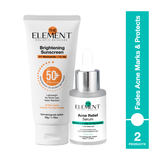
Our Clear & Bright Kit pairs the 2% Salicylic Acid + 5% Niacinamide Acne Relief Serum with our SPF 50 PA++++ Brightening Sunscreen, the two daily steps that keep pores clear and protect the result.
Explore the Clear & Bright Kit →What is a carbon peel?
A carbon peel, also called a carbon laser peel or laser carbon facial, is an in-clinic procedure that combines a liquid carbon mask with a laser. Despite the name, it is not a chemical peel. No acid is used. The "peel" refers to the fine layer of dead skin and oil lifted away when the laser breaks up the carbon.
The laser used is almost always a Q-switched Nd:YAG at 1064 nm, the same device clinics use for some pigment and tattoo treatments, set to much gentler energy for this facial. A session takes about 20 to 40 minutes.
How does a carbon peel work?
- Cleansing. The face is washed so the carbon sits on clean skin.
- Carbon application. A thin layer of liquid carbon is painted on and left to dry for several minutes. The fine particles settle into the surface and the openings of pores.
- Warming pass. The laser is passed over at low energy to gently heat the carbon and the skin beneath it.
- Ablation pass. A second pass at higher energy breaks the carbon into tiny fragments, which pull dead cells and surface oil away with them. You hear small snapping sounds.
- Finish. The skin is cleansed again, and a moisturiser and sunscreen are applied.
The heat is thought to temporarily shrink oil glands and stimulate a little collagen, which explains the reduced shine and smoother look afterwards.
What are the benefits of a carbon peel?
- Less oiliness. Many people notice their skin stays matt for longer in the days after a session.
- Pores look smaller. Clearing debris from the pore openings makes them look tighter for a while. Pore size itself is largely genetic; see large pores: causes and solutions.
- Brighter, smoother skin. Removing surface dead cells leaves skin looking fresher and more even.
- Support for mild acne. Small studies suggest it can reduce mild inflammatory acne, likely through less oil and the laser's effect on acne bacteria. It is an add-on, not a replacement for a daily routine.
- Minimal downtime. Most people go back to work the same day.
What a carbon peel cannot do
A carbon peel will not change your natural skin tone, erase deep acne scars, or reliably clear melasma. Heat can actually worsen melasma, so a doctor should treat that differently. It also does not remove a deep tan in one sitting. For a realistic look at lasers and pigmentation, read laser treatment for pigmentation: what it can and cannot do.
Carbon peel vs chemical peel vs charcoal mask
| Treatment | How it works | Best for | Downtime |
|---|---|---|---|
| Carbon peel | Laser heats and shatters a carbon layer | Oiliness, dullness, visible pores | Usually none to a few hours of redness |
| Chemical peel | Acids such as salicylic or glycolic dissolve dead cells | Acne, marks, uneven texture | None to a week of peeling, by strength |
| Charcoal mask at home | Charcoal absorbs some surface oil | A short-lived matt feel | None |
A charcoal mask at home is not a carbon peel; without the laser, the carbon simply sits on the skin. More on that in what activated charcoal does for skin, and on acid peels in chemical peels for acne.
How many carbon peel sessions do you need?
One session gives a fresh, less oily look for roughly a week or two. For a lasting difference in oiliness and texture, clinics typically suggest 3 to 6 sessions spaced 2 to 4 weeks apart, then occasional maintenance. Cost varies widely by city and clinic, so ask for the per-session price and the device being used before you book.
Is a carbon peel safe for Indian skin?
Yes, in trained hands. The 1064 nm wavelength is one of the safer laser wavelengths for medium and darker skin because it is absorbed less by the skin's own pigment. The main risk for Indian skin is post-inflammatory hyperpigmentation, dark patches that appear if the skin is overheated. Choose a dermatologist-led clinic, tell them about any recent tan, active acne, retinoid use or history of dark marks, and avoid sessions right after a beach holiday.
Carbon peel side effects
- Mild redness and warmth for 1 to 2 hours, sometimes a day
- Temporary dryness or slight flaking
- A prickling sensation during the laser pass
- Rarely, small burns or dark patches if settings are too high
Avoid a carbon peel if you have active infection, open cuts, a sunburn, or are on oral isotretinoin, unless your dermatologist advises otherwise. If you are pregnant, discuss it with your doctor first.
Carbon peel aftercare
- Keep it gentle for 48 to 72 hours. Use a mild cleanser and a light moisturiser. Pause scrubs, retinoids and strong acid exfoliants.
- Wear SPF 50 every morning and reapply when outdoors. Freshly treated skin darkens more easily in the sun.
- Restart actives slowly. After about three days you can return to your usual salicylic acid and niacinamide serum.
- Do not pick at flakes or use hot steam for a couple of days.
Between sessions, your daily routine does most of the work: a salicylic acid serum keeps pores from re-clogging, niacinamide helps regulate oil, and sunscreen protects the brightness you paid for. If you prefer to stay at home, read which chemical peels are safe at home.
Frequently asked questions
Is a carbon peel painful?
Most people feel only mild prickling and warmth, often compared to light snapping on the skin. Numbing cream is rarely needed.
How long do carbon peel results last?
A single session's fresh, matt look lasts about one to two weeks. A course of 3 to 6 sessions gives longer-lasting improvement in oiliness and texture.
Can a carbon peel remove tan?
It can brighten mild tan and dullness by removing surface dead cells, but it will not remove deep tan in one session. Daily sunscreen matters more.
Can I do a carbon peel with active acne?
Mild acne is often treated with carbon peels. Painful, cystic or infected acne should be assessed by a dermatologist first.
Can I wear makeup after a carbon peel?
Most clinics suggest waiting 24 hours. After that, use light, non-comedogenic makeup and remove it gently.
Products in this guide