

Dark Waistline: Why Petticoats and Jeans Darken Skin and How to Fade It

A dark line or band around the waist is usually frictional hyperpigmentation: the skin darkens after months of rubbing and pressure from a petticoat drawstring, saree nada, tight jeans or belt. Indian skin responds to that repeated irritation by making extra melanin. Loosening the waistband, moisturising the area and using gentle brightening actives like niacinamide and kojic acid fade it over two to three months.
Many women in India notice it when they change clothes: a darker, sometimes rough band running around the waist, exactly where the petticoat is tied. Men see the same mark from tight jeans and belts. It is common, harmless, and not a sign of poor hygiene, but it can be stubborn, and scrubbing it harder usually makes it darker. This guide explains why the waistline darkens, how to tell friction marks from conditions that need a doctor, and a realistic routine to even it out.
Dark band around the waist that will not fade?
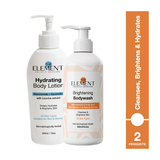
Our Body Glow & Hydration Duo pairs the Brightening Bodywash (niacinamide, kojic acid and vitamin C) with the Hydrating Body Lotion (niacinamide, ceramides and licorice extract), so you cleanse gently and then calm and even out the skin every day.
Explore the Body Glow & Hydration Duo →Why does skin around the waist turn dark?
Waistline darkening happens because the skin under a tight band is rubbed and pressed thousands of times a day. Every time you sit, bend or walk, the drawstring, elastic or denim shifts against the same strip of skin. That constant low-level irritation sends a signal to melanocytes, the pigment cells, to produce more melanin as protection. Over months, the extra pigment builds up into a visible line or band. Dermatologists call this frictional melanosis, and in India it is so closely linked to the petticoat drawstring that it is sometimes described as "petticoat pigmentation".
Brown and Indian skin is especially prone, because it reacts to friction and inflammation with stronger pigment production than lighter skin. The same mechanism explains dark inner thighs and dark elbows and knees.
What makes waistline pigmentation worse?
- Tying the nada or drawstring very tight. More pressure means more irritation in a narrower strip.
- Heat, sweat and humidity. Sweat trapped under the band softens the skin and increases rubbing. Indian summers and monsoons make this worse.
- Synthetic, stiff or rough fabrics. Nylon drawstrings, coarse cords and thick denim waistbands rub harder than soft cotton.
- Scrubbing the area. Loofahs, pumice and harsh scrubs add more friction, which can darken the line further.
- Weight gain or bloating. A band that was comfortable can start digging in.
- Itchy skin conditions. Scratching an itchy waistband rash adds more trauma.
Is it friction or something else?
Most waistline darkening is friction, but a few other conditions can look similar. The table helps sort them out.
| Condition | What it looks like | Key clue |
|---|---|---|
| Frictional pigmentation | Smooth or slightly rough brown band exactly where the waistband sits | Matches the line of the drawstring or belt |
| Fungal infection (ringworm) | Red or brown patch with a raised, scaly, itchy edge that spreads outward | Very itchy, grows in rings, often in humid weather |
| Contact dermatitis | Red, itchy rash, sometimes small bumps | Often linked to a metal button, elastic or new detergent |
| Acanthosis nigricans | Velvety, thickened dark skin | Also on the neck, underarms or groin, linked to insulin resistance |
| Lichen simplex | Thick, leathery dark skin | Develops after long-term scratching |
If the patch is intensely itchy, has a scaly spreading edge, or you also notice velvety dark skin on the neck or underarms, see a doctor. Ringworm needs antifungal treatment, and acanthosis nigricans can be a sign of insulin resistance worth checking. Our guide to dark neck and body pigmentation covers that link in more detail.
How to lighten a dark waistline
Fading frictional pigmentation is a two-part job: stop the rubbing, then help the skin shed the extra pigment. Neither works well alone.
Step 1: Reduce the friction
- Tie the petticoat or salwar nada a little looser, and shift the knot position slightly each day so the same strip is not pressed constantly.
- Choose petticoats and pyjamas with wide, soft cotton waistbands or flat elastic instead of thin cords.
- Wear jeans and trousers that fit at the waist without digging in, and loosen belts when sitting for long periods.
- In hot weather, change out of sweaty clothes quickly and keep the area dry.
Step 2: Cleanse gently, without scrubbing
Wash the area with your hands, not a loofah or pumice stone. A body wash with niacinamide, kojic acid and vitamin C cleans without stripping and starts working on pigment during every shower. Pat dry instead of rubbing.
Step 3: Moisturise and treat every day
Moisturised skin is more supple, so it is damaged less by friction. Apply a body lotion with niacinamide, ceramides and licorice extract straight after bathing, while the skin is still slightly damp. Niacinamide limits the transfer of pigment to surface skin cells, licorice extract has calming and brightening properties, and ceramides help repair the barrier.
Step 4: Be patient
Skin renews itself roughly every four to six weeks, so pigment that took months to build fades gradually. Most people see the line soften in six to eight weeks and noticeably even out in two to three months, provided the friction has been reduced. Without loosening the waistband, even the best actives struggle to keep up.
Which ingredients help fade waist pigmentation?
| Ingredient | How it helps | Notes |
|---|---|---|
| Niacinamide | Reduces pigment transfer, supports the barrier | Gentle, suitable for daily body use |
| Kojic acid | Slows melanin production | Works well in wash-off body washes |
| Vitamin C | Antioxidant, brightens dullness | Pairs well with niacinamide |
| Licorice extract | Calms irritation, evens tone | Good for sensitive, rubbed skin |
| Ceramides | Repair the skin barrier | Makes skin more resistant to friction |
| Mild AHAs (lactic acid) | Gently loosen pigmented surface cells | Use only if skin is not irritated |
Avoid bleaching creams, lemon, baking soda and steroid creams bought without a prescription. Steroid creams in particular can thin the skin and cause stretch marks, and lemon and baking soda irritate skin that is already inflamed. For a deeper look at one of these actives, see our guide to kojic acid for pigmentation.
Can waistline pigmentation be prevented?
Yes, largely. Prevention is the same as Step 1: soft, wide waistbands, a looser knot, breathable cotton, and keeping the area dry. Daily moisturising keeps the skin flexible so it tolerates normal rubbing better. If you have already faded a dark band, continuing these habits stops it coming back.
Frequently asked questions
Why do I have a black line around my waist?
A dark line exactly where a petticoat, nada, elastic or belt sits is almost always frictional pigmentation from months of rubbing and pressure. It is harmless and fades gradually once the friction is reduced and the skin is cared for.
Can a petticoat cause pigmentation?
Yes. A tightly tied petticoat drawstring is one of the most common causes of waistline pigmentation in Indian women, because it presses and rubs the same strip of skin every day.
How long does it take for waist pigmentation to fade?
With looser clothing and a daily routine of gentle cleansing and moisturising with brightening actives, most people see softening in six to eight weeks and clearer improvement in two to three months.
Should I scrub the dark area to remove it?
No. Scrubbing adds friction, which is what caused the darkening in the first place. Cleanse with your hands and let actives like niacinamide and kojic acid do the work.
When should I see a doctor about a dark waistline?
See a doctor if the patch is very itchy, has a scaly edge that spreads, feels velvety and thick, or appears along with dark skin on the neck or underarms. These can signal a fungal infection or insulin resistance.
Products in this guide