

Does Face Yoga Work? What the Evidence Actually Says

Face yoga may make cheeks look slightly fuller and firmer, but the evidence is thin. The best-known study, a small 2018 trial without a control group, found modest improvement in cheek fullness after 20 weeks of daily exercises. There is no good evidence that face yoga removes wrinkles, slims the face, tightens a jawline or fixes a double chin.
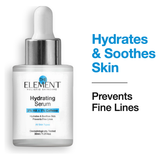
Want the anti-ageing step with better evidence?
The Hydrating Serum pairs 2% hyaluronic acid, which draws water into skin so fine lines look softer, with 1% caffeine to help de-puff. It is anti-ageing through hydration, and it takes less than a minute a day.
Explore the Hydrating Serum →Face yoga is everywhere: puffed cheeks, fish faces, eyebrow lifts and "V" shapes, all promising a lifted, younger face without injections. It is free, it feels good, and it gives you a few quiet minutes. Those are fair reasons to do it. Here is what the research actually supports, which claims are myths, and where face yoga fits next to a skincare routine.
What is face yoga?
Face yoga is a set of exercises that contract, stretch and hold the muscles of the face and neck, often combined with massage and breathing. Popular moves include puffing air from cheek to cheek, smiling with closed lips while lifting the cheeks, widening the eyes, and tilting the head back while pushing the lower lip forward. Routines usually run 10 to 30 minutes a day.
The idea is that the face has more than 40 muscles, and training them like other muscles could make them thicker and firmer, which would lift the skin over them.
Does face yoga work? What the research says
The main study came from Northwestern University and was published in JAMA Dermatology in 2018. Women aged 40 to 65 did 30 minutes of facial exercises daily for 8 weeks, then every other day for 12 more weeks. Only 16 of the 27 who started completed the programme. Dermatologists rating their photos saw improvement in upper and lower cheek fullness, and the women's estimated age dropped by about three years on average.
That result is encouraging but limited: the group was small, many dropped out, there was no comparison group, and the women were all middle-aged. Other studies are even smaller. A 2014 review of facial exercise research concluded that the evidence was too weak to draw firm conclusions. So "face yoga may help cheek fullness a little, with a lot of daily effort" is a fair summary.
Face yoga claims vs evidence
| Claim | What the evidence says |
|---|---|
| Fuller, lifted cheeks | Some support from one small study |
| Removes wrinkles | No good evidence; repeated expressions can deepen some lines |
| Slims the face or burns face fat | No. You cannot spot-reduce fat |
| Sharper jawline, no double chin | No reliable evidence |
| Reduces morning puffiness | Gentle massage can move fluid temporarily |
| Brighter, "glowing" skin | A short-lived flush from blood flow, not a lasting change |
Can face yoga cause wrinkles?
It can, in some areas. Expression lines such as forehead lines, frown lines and crow's feet form where skin folds again and again over a moving muscle. Exercises that scrunch the forehead or squint the eyes repeat exactly those folds. If you practise face yoga, favour moves that lift the cheeks and avoid repeated forehead raising and squinting. Rubbing or pulling skin hard, especially around the eyes, is also a bad idea because that skin is thin.
Does face yoga help a double chin or face fat?
No. Fat under the chin and in the cheeks is body fat, and exercising the muscle underneath does not burn the fat on top. Genetics, weight, posture and age decide how much you have. Holding your phone at eye level and good neck posture make a double chin look less obvious in photos, but they do not change the fat itself.
What actually slows visible ageing
The habits with strong evidence are less exciting than face yoga, but they do more:
- Daily sunscreen. UV is responsible for most visible skin ageing: wrinkles, sagging and uneven tone. Broad-spectrum SPF every morning is the single best anti-ageing step.
- Hydration. Dehydrated skin makes fine lines look deeper. Hyaluronic acid holds water in the top layers of skin, so lines look softer. Our guide to hyaluronic acid serum explains how to use it on damp skin.
- Proven actives. Retinoids, peptides and niacinamide have far more research behind them than facial exercise. See our article on peptides for skin.
- Lifestyle. Not smoking, sleeping well and limiting added sugar all slow visible ageing. Our article on sugar and skin ageing explains glycation.
For a starter plan, our hydration-first routine for early fine lines covers each step in order.
How to do face yoga safely if you enjoy it
- Start with clean skin and apply a serum or moisturiser so your fingers glide and do not drag.
- Choose cheek-lifting moves, such as a closed-lip smile while lifting the cheeks, or puffing air from one cheek to the other.
- Hold each move for 10–20 seconds and repeat 5–10 times.
- Skip repeated forehead raising, frowning and squinting.
- Be consistent. In the study, any change took months of near-daily practice.
Stop if you feel jaw pain or clicking. People with TMJ problems should ask a doctor or physiotherapist first.
Face yoga vs gua sha vs face rollers
Face yoga moves the muscles. Gua sha and rollers move the skin and fluid on the surface. All three can reduce morning puffiness for a short while, and none of them replaces sunscreen or actives. Our guide to what gua sha actually does compares the tools, and the article on puffy eyes covers what helps under-eye swelling.
Frequently asked questions
How long does face yoga take to show results?
In the main study, cheek fullness improved after about 20 weeks of near-daily practice. Results, if any, are gradual and modest.
Can face yoga replace Botox or fillers?
No. Its effect is far smaller, and it does not relax expression lines the way Botox does.
Is face yoga good for people in their 20s?
It is harmless if done gently, but sunscreen and hydration matter far more for preventing ageing at that age.
Can face yoga give you a sharper jawline?
There is no reliable evidence. Jawline shape depends mostly on bone structure, body fat and age.
Should I apply anything before face yoga?
Yes, a serum or light moisturiser, so your fingers do not pull the skin.
Products in this guide