

Spirulina for Skin: Benefits, Side Effects and Eating vs Applying It

Spirulina is a nutritious blue-green algae, rich in protein, antioxidants and iron, but there is little human evidence that it clears acne or makes skin glow. Most skin claims come from lab and animal studies. Eating a tested, good-quality spirulina is generally safe for healthy adults, while spirulina face masks mainly hydrate and leave a green tint.
Spirulina shows up in smoothies, green powders and "detox" face masks, often with promises of glowing, clear skin. It is a genuinely nutrient-dense food, which makes those claims sound believable. Here is what spirulina contains, what the evidence says about eating it and applying it, the safety issues people rarely mention, and better-supported ways to support your skin from the inside and out.
Looking for an inside-out approach to an even glow?
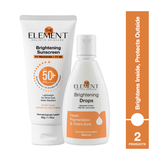
Our Inside-Out Brightening Duo pairs the Brightening Drops, made with Manjistha and Amla and taken in water after meals, with a 2% Niacinamide SPF 50+ sunscreen for daily protection.
Explore the Inside-Out Brightening Duo →What is spirulina?
Spirulina is a blue-green microalga, technically a cyanobacterium called Arthrospira platensis, grown in alkaline water and dried into a deep green powder or tablets. By dry weight it is roughly 60% protein. It also contains phycocyanin, the blue pigment that acts as an antioxidant, beta-carotene, iron and gamma-linolenic acid, an omega-6 fat. It is often marketed as containing vitamin B12, but most of that B12 is an inactive form that the human body cannot use, so it is not a reliable B12 source for vegetarians.
Does eating spirulina help your skin?
Possibly a little, indirectly, but it is not a proven skin treatment. Here is how each common claim holds up.
- Antioxidant protection: phycocyanin and beta-carotene neutralise free radicals in lab tests. Whether that meaningfully protects skin in people has not been shown.
- Acne: lab work shows anti-inflammatory activity, but there are no good human trials showing spirulina reduces breakouts.
- Glow and even tone: no clinical studies show spirulina lightens pigmentation or improves glow.
- Nutrition: if your diet is low in protein or iron, spirulina can help fill gaps, and good overall nutrition does support healthy skin.
The honest view is that spirulina is a useful food supplement, not a skin supplement. Your diet as a whole, sleep and stress matter more than any single green powder. Our guides on gut health and skin and whether drinking water helps your skin cover the bigger picture.
Does applying spirulina on the face work?
Spirulina face masks are popular, especially mixed with honey, yoghurt or aloe gel. Applied to skin, spirulina's proteins and polysaccharides can hold water and leave the face feeling softer for a while, and some small studies have looked at algae extracts for hydration. There is no good evidence that a spirulina mask clears pimples, shrinks pores or removes dark spots.
Practical downsides include a green tint that can stain skin, nails and towels, and a strong smell. Like any home mask, it can also irritate sensitive skin or cause a reaction, so patch test first.
Is spirulina safe?
Good-quality spirulina is generally safe for healthy adults in normal amounts, often 1 to 5 grams a day in studies. The biggest risk is quality, not spirulina itself.
- Contamination: algae grown in uncontrolled water can be contaminated with microcystins, liver toxins made by other blue-green algae, or with heavy metals such as lead and arsenic. Buy only brands that publish third-party testing.
- Stomach upset: nausea, bloating or loose stools are common when starting. Begin with a small dose.
- Autoimmune conditions: spirulina may stimulate the immune system, so people with lupus, rheumatoid arthritis or multiple sclerosis should check with their doctor.
- Medicines: it may interfere with immune-suppressing medicines and could add to the effect of blood-thinning medicines.
- Phenylketonuria (PKU): spirulina contains phenylalanine and must be avoided.
- Pregnancy, breastfeeding and children: there is not enough safety data, so ask a doctor first.
Spirulina vs other inside-out options for skin
| Option | What it offers | Evidence for skin |
|---|---|---|
| Spirulina | Protein, iron, phycocyanin, beta-carotene | Mostly lab and animal studies |
| Omega-3 (fish oil, flax) | Anti-inflammatory fats | Some small acne and dryness studies |
| Amla | Vitamin C and polyphenols | Traditional use, limited trials |
| Manjistha | Ayurvedic actives used for skin tone | Traditional use, early research |
| Balanced diet, sleep, sunscreen | The foundations | Strongest overall |
See our guides on omega-3 for skin and manjistha and amla for even tone.
How to use spirulina if you want to try it
- Choose a tested brand that states it is free of microcystins and heavy metals.
- Start small, with about 1 gram a day, and increase slowly if your stomach is fine.
- Take it with food, stirred into a smoothie, juice or yoghurt.
- For a mask, mix half a teaspoon with aloe gel, apply for 10 minutes, rinse well and moisturise. Patch test first.
- Keep realistic expectations. Think of it as nutrition, not as a skin treatment.
A better-supported inside-out routine for glowing skin
An inside-out approach works best when it pairs something you take with the steps your skin needs on the outside, above all daily sunscreen, because sun exposure is the biggest driver of tan and uneven tone on Indian skin. Our Inside-Out Brightening Duo is built around that idea. The Brightening Drops combine Manjistha and Amla with 20+ Ayurvedic actives and are taken orally: 5 to 6 drops twice daily after food, directly or in a glass of water. Used consistently, they support a healthier-looking glow over 4 to 8 weeks. The duo's 2% Niacinamide SPF 50+ PA++++ sunscreen protects skin every morning. If you also enjoy spirulina as part of a balanced diet, it can sit alongside this routine.
Frequently asked questions
Can spirulina clear acne?
There is no good human evidence that spirulina clears acne. It has anti-inflammatory activity in lab studies, but proven acne treatments such as salicylic acid work far more reliably.
Does spirulina make skin fair or brighter?
No study shows spirulina lightens skin or fades pigmentation. Daily sunscreen and ingredients like niacinamide are better supported for an even tone.
How long does spirulina take to show results on skin?
Because there are no proven skin effects, there is no reliable timeline. Any benefit is likely to come from better overall nutrition over months, not weeks.
Can I apply spirulina on my face daily?
It is better to use a spirulina mask once or twice a week at most. Daily use is unnecessary, can stain skin and raises the chance of irritation.
Is spirulina safe to take every day?
A tested, good-quality spirulina is generally safe daily for healthy adults at normal doses. Avoid it with PKU, and check with a doctor if you are pregnant, have an autoimmune condition or take regular medicines.
Products in this guide