

Trifarotene for Acne on the Face, Back & Chest: How to Use It

Trifarotene is a prescription retinoid cream (0.005%) approved for acne on both the face and the body, including the back, chest and shoulders. It is a fourth-generation retinoid that targets one receptor in the skin, RAR-gamma. Applied once nightly as a thin layer, it shows clear results in about 12 weeks. It must not be used in pregnancy.
Most acne treatments were tested on the face. Back and chest acne, which affects roughly half of people with facial acne, was often treated with whatever was left in the tube. Trifarotene was the first topical retinoid studied and approved specifically for both face and trunk. This guide explains how it works, how to apply it over a large area like the back, what to expect in the first weeks, and how to build a face-and-body routine around it.
Treating breakouts on your face and body?
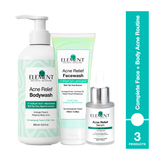
Our Head-to-Toe Acne Kit pairs the Acne Relief Body Wash (2% Salicylic Acid with tea tree and neem) for the back and chest with the Acne Relief Face Wash and Acne Relief Serum (2% Salicylic Acid with 5% Niacinamide) for the face.
Explore the Head-to-Toe Acne Kit →What is trifarotene?
Trifarotene is a topical retinoid sold as a 0.005% cream. It was approved by the US FDA in 2019 for acne on the face and trunk in people aged 9 and older. It is a prescription medicine, so in India the route is through a dermatologist, who can tell you whether it is available and right for your acne.
Its strength looks tiny on paper, 0.005% against adapalene's 0.1%, but percentages cannot be compared across retinoids. Trifarotene is very potent at the receptor it targets, so a small amount does the work.
How does trifarotene work?
Trifarotene works by binding almost only to RAR-gamma, the retinoic acid receptor that is most common in the outer layer of the skin. That switches skin cells back to a normal shedding cycle so they stop plugging pores, and it reduces the inflammation inside existing pimples.
Older retinoids act on several receptors. The idea behind a selective retinoid is to get the acne benefit where it is needed, in the skin, while keeping the drug's effect in the rest of the body low. It is also broken down quickly by the liver if any is absorbed, which is one reason it was considered suitable for large areas like the back.
Is trifarotene good for back and chest acne?
Yes. This is where trifarotene stands out. In two large 12-week trials with more than 2,400 people, trifarotene improved acne on both the face and the trunk compared with the cream base alone. A 52-week study found the results held up with longer use, and it was generally well tolerated.
Body acne is often driven by sweat, friction from tight clothing and gym gear, and oil on the upper back. Medication works best when those triggers are handled too; our guide to back and body acne covers the everyday habits that help. If the bumps on your back are small, itchy and all the same size, they may be fungal rather than acne, which needs different treatment. See fungal acne vs regular acne.
Trifarotene vs other retinoids
| Trifarotene | Tazarotene | Adapalene | Tretinoin | |
|---|---|---|---|---|
| Generation | Fourth | Third | Third | First |
| Acne strength | 0.005% | 0.045%–0.1% | 0.1%–0.3% | 0.025%–0.1% |
| Receptor target | RAR-gamma only | RAR-beta and gamma | RAR-beta and gamma | All RARs |
| Studied on the back and chest | Yes, approved | Mainly face | Mainly face | Mainly face |
| Pregnancy | Avoid | Must be avoided | Avoid | Avoid |
For more on the others, read our guides to tazarotene and adapalene.
How do you apply trifarotene?
Apply trifarotene once a day in the evening, as a thin layer over the whole affected area, on clean, dry skin.
- Face: one pump covers the forehead, cheeks, nose and chin. Avoid the eyes, lips and the corners of the nose.
- Back and chest: two pumps usually cover the upper trunk, and up to four pumps a day across face and body is the maximum in the label. Ask someone to help with the back if you cannot reach it evenly.
- Wait until skin is fully dry after your bath before applying. Damp skin absorbs retinoids faster and is more likely to sting.
- Moisturise. A light, fragrance-free moisturiser over the top helps with dryness, especially on the face.
- Wear sunscreen. Use a broad-spectrum SPF 50 on the face and any treated skin that sees the sun.
Many dermatologists start with every second night for the first one to two weeks, then move to nightly use.
What to expect: side effects and timeline
Irritation is most common in the first two to four weeks: dryness, redness, peeling, itching and a mild stinging or burning. In studies it was usually mild to moderate and settled as treatment continued. Some people also see a short flare of breakouts early on as clogged pores clear. Our guide to purging vs breakouts explains how to tell them apart.
- Weeks 1 to 4: adjustment, possible dryness and a few new spots.
- Weeks 4 to 8: fewer new pimples, less redness.
- Week 12: the usual point to judge results with your dermatologist.
Stop and get advice if you develop swelling, blistering or severe burning. Avoid waxing treated skin, as retinoids make it more fragile.
Building a face-and-body routine with trifarotene
Keep the routine simple and split the jobs between morning and night:
- Morning, face: a gentle salicylic acid face wash, a light serum if approved, moisturiser and SPF 50.
- Shower, body: a salicylic acid body wash on the back and chest. As a rinse-off product it is gentler than a leave-on acid, but if your skin is stinging from trifarotene, use it every other day.
- Night: cleanse, let the skin dry completely, apply trifarotene, then moisturise.
- Do not stack: avoid leave-on acids, scrubs and other retinoids on the same night unless your dermatologist says otherwise.
Change out of sweaty clothes soon after exercise, and wash pillowcases and gym tops often. These small things matter more for body acne than for the face.
The bottom line
Trifarotene is a selective, fourth-generation retinoid and the first studied and approved for acne on both the face and the back and chest. Use a thin layer at night on dry skin, moisturise, wear SPF 50, and give it about 12 weeks. Pair it with a pore-clearing face and body wash routine and simple sweat habits, avoid it in pregnancy, and use it only under a dermatologist's care.
Frequently asked questions
Can trifarotene be used on the back?
Yes. Trifarotene is approved for acne on the face and the trunk, including the back, chest and shoulders. Apply a thin layer to clean, dry skin at night.
Is trifarotene stronger than adapalene?
The percentages cannot be compared directly. Trifarotene is highly selective and potent at a low strength; which suits you depends on your skin and your dermatologist's plan.
How long does trifarotene take to work?
Most people see fewer breakouts by weeks four to eight, and results are usually judged at about 12 weeks of nightly use.
Can I use salicylic acid with trifarotene?
A rinse-off salicylic acid wash is usually fine. Avoid leave-on acids on the same night, and ask your dermatologist if your skin feels irritated.
Is trifarotene safe during pregnancy?
No. Avoid trifarotene during pregnancy, while trying to conceive and while breastfeeding. Ask your doctor about pregnancy-safe alternatives.
Products in this guide