

Vitamin C Tablets for Skin: Do They Really Work?

Vitamin C tablets help your skin only if your diet is short of vitamin C. Your body needs it to make collagen and heal wounds, so correcting a deficiency matters. But tablets do not lighten skin tone, and extra vitamin C beyond what you need is largely passed out in urine. For dark spots, sunscreen and topical actives do far more.
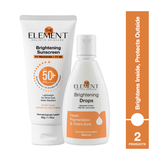
Working on uneven tone from the inside and the outside?
The Inside-Out Brightening Duo pairs our Ayurvedic Brightening Drops (Manjistha and Amla, with neem, turmeric and 20+ herbs, taken in water after a meal) with a 2% niacinamide SPF 50 PA++++ sunscreen for daily protection.
Explore the Inside-Out Brightening Duo →Chewable and effervescent vitamin C tablets are cheap, easy to find at any chemist and widely recommended on social media for "glass skin" and fairness. Some people take one a day, others take several. Here is what oral vitamin C really does for skin, how much you need, and where the claims go too far.
What does vitamin C do for your skin?
Vitamin C is essential for skin because the enzymes that build and stabilise collagen cannot work without it. It is also one of the skin's main antioxidants and supports normal wound healing.
Humans cannot make vitamin C, so it has to come from food. Skin draws its supply from the bloodstream. When intake is very low over months, the skin shows it: slow healing, easy bruising, rough bumps around hair follicles and dry, fragile skin. These are features of vitamin C deficiency, and severe deficiency is scurvy. Our guide to vitamin deficiencies that show up on your skin covers this alongside B12, iron and zinc.
Do vitamin C tablets make your skin glow or fairer?
Vitamin C tablets do not make skin fairer. Your natural skin tone is set by genetics and the type of melanin your skin produces, and no oral vitamin changes that.
If you were genuinely low in vitamin C, restoring normal levels can make skin look healthier, because healing and collagen support return to normal. If you already eat fruit and vegetables daily, a tablet is unlikely to change how your skin looks. Claims that vitamin C tablets, often sold alongside glutathione, "whiten" skin are not supported by good evidence. Our comparison of glutathione and manjistha goes through what the research on oral brighteners actually shows.
Oral vs topical vitamin C: which is better for skin?
For visible skin concerns such as dark spots and dullness, topical vitamin C is more targeted than tablets. When you swallow vitamin C, absorption from the gut is tightly controlled and the amount that reaches the skin rises only modestly. Topical vitamin C, applied as a stable serum, can deliver much higher concentrations straight to the skin, where it acts as an antioxidant and helps reduce the look of pigmentation over weeks.
| Factor | Vitamin C tablets | Topical vitamin C serum |
|---|---|---|
| Main role | Prevents or corrects deficiency | Antioxidant protection, brighter-looking skin |
| Reaches the skin | Modestly, via the blood | Directly, at a higher concentration |
| Effect on dark spots | Not proven | Gradual improvement with consistent use |
| Changes skin tone | No | No, but evens uneven tone |
| Common side effects | Stomach upset at high doses | Tingling, dryness in sensitive skin |
Our guide to vitamin C for skin covers forms, strengths and how to use a serum.
How much vitamin C do you actually need?
Indian adults need roughly 65–80 mg of vitamin C a day, according to the ICMR-NIN 2020 dietary guidelines, with slightly more advised during pregnancy and breastfeeding and for smokers. That is easy to meet from food. A single guava, a couple of amla or an orange will usually cover it.
Most chewable tablets contain 500 mg, many times the daily requirement. Absorption becomes less efficient as the dose rises, and the body excretes what it cannot use. More is not better for skin.
Good food sources of vitamin C include:
- Amla, one of the richest common sources.
- Guava, often richer than oranges.
- Citrus such as oranges, mosambi and lemon.
- Capsicum, tomatoes and leafy greens like drumstick leaves.
Vitamin C is destroyed by long cooking and heat, so some raw fruit or lightly cooked vegetables each day matters. See foods for glowing skin for a wider list.
Are vitamin C tablets safe to take daily?
For most healthy adults, a standard 500 mg tablet a day is considered safe. The commonly cited upper limit is 2,000 mg a day, above which stomach cramps, diarrhoea and nausea become more likely. Be more careful if:
- You have had kidney stones, since high-dose vitamin C can raise oxalate in urine.
- You have an iron overload condition, because vitamin C increases iron absorption.
- You are pregnant, on regular medication or managing a chronic condition. Ask your doctor before starting any supplement.
Effervescent tablets often contain sodium and sweeteners, and chewables may contain sugar. Read the label if you take them every day.
What actually works for dark spots and uneven tone?
If your real goal is fading tan, acne marks or patches, an inside-out approach works better than any single tablet:
- Daily broad-spectrum sunscreen. Sun exposure is the biggest driver of pigmentation on Indian skin. Without SPF, nothing else holds.
- A correctly dosed topical active. Niacinamide, vitamin C serums, alpha arbutin and kojic acid all have evidence for evening tone.
- A balanced diet with fruit, vegetables and enough protein, so your skin has what it needs to repair.
- Inside-out support. Traditional Ayurvedic actives such as manjistha and amla have emerging evidence for skin support. Our guide to manjistha and amla for even tone explains the idea, and beauty from within covers nutrition more broadly.
Give any routine 8–12 weeks before judging it. Skin renews slowly, and pigmentation fades even more slowly.
Frequently asked questions
Can I take vitamin C tablets for glowing skin?
Only if your diet is low in vitamin C. If you already eat fruit and vegetables daily, tablets are unlikely to make your skin look different.
Do vitamin C tablets remove pigmentation?
No good evidence shows that oral vitamin C fades pigmentation. Sunscreen and topical actives are far more effective for dark spots.
When is the best time to take a vitamin C tablet?
With or after a meal is easiest on the stomach. Taking it with an iron-rich meal also helps you absorb more iron.
Can I take vitamin C tablets and use a vitamin C serum together?
Yes. They work in different ways and do not interact. The serum does most of the work on visible skin concerns.
Is amla better than a vitamin C tablet?
For most people, amla and other whole fruits cover daily needs and bring fibre and other plant compounds too. A tablet is useful mainly when diet falls short.
Products in this guide