

Artificial Jewellery Allergy: Nickel Rash, Dark Marks and How to Fade Them

An itchy rash or dark patch where you wear artificial jewellery is usually a nickel allergy. Nickel is the most common cause of allergic contact dermatitis worldwide, and it is often used in imitation earrings, chains, bangles and clasps. The rash appears 12 to 48 hours after contact. Stop wearing the piece, let the skin heal, then fade any dark mark with niacinamide and daily sunscreen.
Imitation jewellery is everywhere in India, from festival jhumkas and kundan sets to everyday chains, bangles and the clasp of a mangalsutra. For many people it causes no trouble. For others, it leaves red, itchy earlobes or a stubborn brown ring on the neck that stays long after the jewellery is off. Here is why it happens, how to tell, what to do and how to keep wearing the pieces you love.
Left with dark marks once the rash has healed?
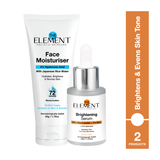
Our Bright and Soft Skin Combo pairs the 10% Niacinamide Brightening Serum, to fade marks gradually, with the 2% Hyaluronic Acid Moisturiser, to support the barrier while it recovers.
Explore the Bright and Soft Skin Combo →Why does artificial jewellery cause a rash?
Most reactions come from nickel, a cheap, strong metal used in many base alloys, plating layers and clasps. When the jewellery sits on skin, sweat slowly dissolves tiny amounts of nickel, which pass into the skin. In people who are sensitised, the immune system treats nickel as a threat and causes inflammation.
A few points explain why it catches people by surprise:
- It is a delayed allergy. The rash usually appears 12 to 48 hours after wearing the piece, so the link is easy to miss.
- Sensitivity can start any time. You can wear a metal for years and then react. Once sensitised, it is usually lifelong.
- Plating wears off. Gold or silver plating can hide a nickel base at first. As the plating rubs away, the reaction appears.
- Sweat and heat make it worse. Humid weather, long wedding days and dancing all increase how much nickel dissolves.
Women are affected far more often than men, largely because of earlier and more frequent ear piercing. Cobalt and chromium in some alloys can cause similar reactions.
What does a nickel allergy look like?
It is a rash shaped like the jewellery: an earlobe, a line around the neck, a band on the wrist, a spot under a ring. Look for:
- Itching, often the first and strongest sign.
- Redness or small bumps, sometimes with tiny fluid-filled blisters.
- Dry, scaly or cracked skin with repeated exposure.
- Weeping and crusting on pierced earlobes.
- Thickened, darker skin where the reaction keeps returning. On brown skin, a long-running rash often heals as a grey-brown patch.
The same metal in other objects causes the same rash. A patch under a jeans button or belt buckle, the back of a watch or a metal spectacle frame is often the same allergy. We look at the waist version in dark waistline pigmentation.
Is it an allergy or something else?
| Look-alike | Clue | Where |
|---|---|---|
| Nickel allergy | Itchy rash only where metal touches; appears a day or two later | Ears, neck, wrist, waist |
| Friction irritation | Rubbing from heavy pieces; sore rather than itchy; settles fast | Earlobes, neck |
| Perfume reaction | Brown streaks where perfume was sprayed, made worse by sun | Sides of neck |
| Neck acne | Pimples with whiteheads, not a flat itchy rash | Nape, hairline |
| Infected piercing | Throbbing pain, warmth, yellow pus, swelling | Earlobe |
If the patch is on your neck and you also use perfume there, read perfume dark spots on the neck. For pimples rather than a rash, see neck acne.
What should you do when the rash appears?
- Take the jewellery off and keep it off until the skin has fully healed, usually two to four weeks.
- Wash the area gently with lukewarm water and a mild cleanser, and pat dry.
- Calm it. A cool compress for 10 minutes and a plain, fragrance-free moisturiser help. Our guide to the skin barrier explains why.
- Do not scratch. Scratching thickens the skin and deepens the dark mark later.
- See a doctor if it is severe. A dermatologist may prescribe a short course of a mild steroid cream. Use these only as directed, never long term and never as a "fairness" cream on the face.
Seek medical care quickly if a pierced earlobe becomes hot, swollen and painful or oozes pus, as that suggests infection.
How do you fade the dark mark it leaves?
Once the skin is no longer itchy, red or broken, the brown mark is post-inflammatory hyperpigmentation. It fades on its own, but often slowly, over three to twelve months on deeper skin tones. You can help it along:
- Niacinamide. At 4% to 10%, it reduces the transfer of pigment to surface skin cells and is gentle on healed skin. See how niacinamide fades marks.
- Moisturiser. A healthy barrier tolerates actives better and looks more even.
- Sunscreen on exposed areas. The neck and ears get more sun than people think, and UV darkens these marks.
- Patience and no scrubbing. Rubbing with lemon, baking soda or harsh scrubs can trigger more pigment.
For darkness across the neck that is not linked to jewellery, see dark neck and body pigmentation.
How can you keep wearing jewellery without a reaction?
Choose metals that release little or no nickel, and protect the skin when you do wear fashion pieces:
- Safer metals: titanium, niobium, platinum, high-carat yellow gold (18K to 22K) and good-quality sterling silver are generally better tolerated. White gold and some "surgical steel" can still contain nickel.
- Earring posts matter most. Swap the hooks or posts on favourite earrings for titanium or gold ones.
- Short wear only. Wear imitation sets for a few hours, take them off before sleeping or exercising, and wipe sweat away.
- Barrier coats. Clear nail polish on the parts that touch skin can help temporarily. Reapply as it wears.
- Check before buying. Nickel spot-test kits change colour if a piece releases nickel.
If you react to several things at once, such as bindis or hair dye, a dermatologist can arrange patch testing to pin down the allergen. See also bindi allergy and black henna allergy.
Frequently asked questions
Why does artificial jewellery turn my skin black or green?
Green or black staining is often the metal reacting with sweat, not an allergy, and it washes off. An itchy, red rash that appears a day or two later points to a nickel allergy.
How long does a nickel allergy rash last?
Once the jewellery is removed, the rash usually settles within two to four weeks. Any dark mark it leaves can take several months to fade on deeper skin tones.
Can I suddenly become allergic to jewellery I have worn for years?
Yes. Nickel sensitivity can develop at any age, and plating that wears thin can expose a nickel base that was covered before.
Which jewellery is safe for a nickel allergy?
Titanium, niobium, platinum, high-carat yellow gold and good-quality sterling silver are usually well tolerated. White gold and some steel alloys can still contain nickel.
Can I use niacinamide on a jewellery rash?
Wait until the rash has healed and the skin is no longer red, itchy or broken. Then niacinamide, with daily sunscreen, can help fade the dark mark left behind.
Products in this guide