

Sunscreen Stick vs Lotion: Does a Stick Protect Enough?

A sunscreen stick can protect as well as a lotion with the same SPF, but only if you apply enough of it. Most people glide a stick over the face once or twice, which leaves far less product than the SPF on the label assumes. Use a lotion for your main morning layer and a stick for quick touch-ups on the go.
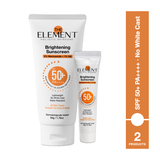
Want a full morning layer and an easy way to top up later?
The Reapply Duo pairs a 50 g Brightening Sunscreen for home with a 20 g tube for your bag: SPF 50+ PA++++, oxybenzone-free, with 2% Niacinamide and 1% Hyaluronic Acid.
Explore the Reapply Duo →Sunscreen sticks have become popular because they are mess-free, fit in a pocket and feel easy to use over makeup. The question people keep asking is whether that convenience costs them protection. This guide explains how sticks compare with lotions and creams, where each format works best, and how to use a stick so it actually does its job.
Is a sunscreen stick as good as a lotion?
On paper, yes. The SPF and PA rating on any sunscreen are measured in a lab at a fixed amount of product: 2 mg per square centimetre of skin. A stick labelled SPF 50 and a lotion labelled SPF 50 give the same protection when each is applied at that thickness.
The difference is in real use. With a lotion, you can see and measure how much you squeeze out. With a stick, a single swipe leaves a thin, nearly invisible film. Studies of how people apply sunscreen consistently find that most of us use a half or less of the tested amount, and protection drops sharply when the layer is thin. A stick makes that under-application easier to fall into because there is no visual cue for "enough".
How much sunscreen stick do you need?
A common guide is at least four passes back and forth over each area, then gently patting or spreading the product so it covers evenly. One quick swipe across each cheek is not enough.
For comparison, the face and neck need roughly a quarter to a half teaspoon of lotion, which is about the length of two fingers. Our guide to the two-finger rule explains why that amount matters. With a stick, you are trying to match that quantity without being able to see it, so being generous with passes is the safer habit.
Sunscreen stick vs lotion vs gel: which format suits what?
| Format | Best for | Watch out for |
|---|---|---|
| Lotion or cream | Your main morning layer on face, neck and ears; dry or normal skin | Can feel heavy in humid weather if the formula is rich |
| Gel or fluid | Oily and acne-prone skin, hot and humid days | May need a moisturiser underneath in winter |
| Stick | Touch-ups over makeup, nose, ears, lips, around the eyes, kids on the go | Easy to under-apply; waxy base can feel heavy on oily skin |
| Spray | Large body areas and hard-to-reach skin | Uneven coverage and product lost to the air; avoid spraying near the face |
When does a sunscreen stick make sense?
A stick is at its best as a second tool, not the only one. These are the situations where it genuinely earns a place in your bag:
- Reapplying over makeup. A stick lets you add a layer without disturbing foundation too much. See our guide on using sunscreen with makeup for the full approach.
- Small, high-exposure spots. The nose, the tops of the ears, the hairline parting and the back of the neck are easy to target with a stick.
- Around the eyes. Some people find a solid texture less likely to run into the eyes than a fluid, especially when sweating. Read more on sunscreen under the eyes.
- Outdoor workouts and commutes. A stick is quick to use with one hand at a bus stop or on a cricket field.
Why a lotion should still be your first layer
A lotion or cream is easier to apply in the right amount, spreads evenly into the edges of the face, and covers the neck and ears without dragging the skin. That makes it the more reliable choice for the layer that has to protect you from morning to midday.
Think of it this way: the morning layer is where you get most of your protection, so use the format you can measure. The stick, or a small travel tube, is for keeping that protection going. In India's strong sun, that second part matters. Sweat, oil, touching your face and wiping with a handkerchief all remove sunscreen through the day, which is why reapplying every two to three hours outdoors is the standard advice.
Do sunscreen sticks cause breakouts?
They can, for some skin. Many sticks use waxes and oils to keep their solid shape, and these bases can feel heavy on oily or acne-prone skin. That does not mean every stick will cause acne, but if you break out easily, a lightweight lotion or gel formula is usually more comfortable for all-day wear.
If you are acne-prone and want to use a stick, keep it for small areas and touch-ups, cleanse properly at night, and check the ingredient list. Our guide on sunscreen for acne-prone skin covers what to look for.
What to check before buying a sunscreen stick
- SPF 30 or higher, ideally SPF 50 for Indian sun and outdoor days.
- A PA rating or "broad spectrum" claim, so you know it also protects against UVA, which drives tanning and pigmentation. Our explainer on what PA means goes deeper.
- Water resistance if you sweat a lot or will be outdoors for long.
- A base that suits your skin type: lighter formulas for oily skin, richer ones for dry skin.
- Hygiene. Wipe the surface if it touches a sweaty or dirty face, and do not share it.
A simple routine that uses both formats
- Morning: after moisturiser, apply a full two-finger measure of lotion sunscreen to the face, neck and ears. Wait a few minutes before makeup.
- Midday: if you are outdoors or sweating, reapply. Use a small tube of the same lotion if you can wash or blot first, or a stick with several passes over makeup.
- Evening: remove sunscreen fully with a gentle cleanser so it does not sit in pores overnight.
The simplest way to make this work is to keep two sizes of the same sunscreen: a larger one at home and a small one in your bag. You get one texture you know suits your skin, measured application in the morning, and an easy top-up later.
Frequently asked questions
Can I use only a sunscreen stick on my face?
You can, but it is easy to apply too little. If a stick is your only sunscreen, use at least four passes over each area and spread it evenly. A lotion is the more reliable first layer.
Is a sunscreen stick good for oily skin?
Some are, but many sticks use waxes and oils that feel heavy on oily skin. A lightweight gel or lotion is usually more comfortable for oily and acne-prone skin.
Can I apply a sunscreen stick over makeup?
Yes. This is one of the best uses for a stick. Press and glide it gently so you add a layer without moving your makeup too much.
How often should I reapply a sunscreen stick?
The same as any sunscreen: every two to three hours when outdoors, and after sweating, swimming or wiping your face.
Does SPF in a stick wear off faster?
Not in itself. Any sunscreen wears off with sweat, oil and touching. A stick only protects less when it is applied too thinly.
Products in this guide