

Dry Patches on Face: Causes and What Actually Helps

Dry patches on the face usually come from a weakened skin barrier, triggered by cold air, hot water, harsh cleansers or overused actives. Eczema and seborrheic dermatitis are common medical causes. Most simple patches improve within one to two weeks with a gentle cleanser, moisturiser on damp skin, and a short break from exfoliating acids and retinoids.
They often appear around the nose, mouth, cheeks and eyebrows, especially when the weather turns cold in November and December. Makeup catches on them and moisturiser seems to do nothing. The good news is that most patches respond to simple changes. The important part is checking that it really is dryness, since a few lookalikes need a different treatment. Here is how to tell, what to do, and when to get it checked.
Rough, tight patches that moisturiser alone isn't settling?
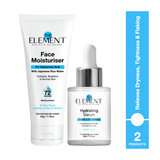
Our Dry Skin Rescue Combo layers a 2% Hyaluronic Acid + 1% Caffeine Hydrating Serum under a 2% Hyaluronic Acid + Japanese Rice Water Moisturiser, to draw water into skin and then help hold it there.
Explore the Dry Skin Rescue Combo →Why do I get dry patches on my face?
Dry patches form when the skin barrier loses too much water in one area, leaving the surface rough, tight or flaky. Often a few of these factors combine:
- Cold, dry air. Low humidity pulls water from the skin, and north Indian winters can be especially harsh.
- Heaters and hot water. A room heater dries indoor air, while hot showers strip away protective oils.
- Harsh cleansers. Soaps and foaming washes can leave skin feeling squeaky and depleted.
- Overused actives. Retinoids, glycolic acid and salicylic acid can over-exfoliate if you use them too often or layer too many.
- Allergy or irritation. Fragrance, hair products and makeup can leave a patch where they touch the skin.
- Licking and rubbing. Saliva and friction can dry skin around the mouth and nose. A cold or runny nose often starts the cycle.
- Medicines and health conditions. Isotretinoin and thyroid problems, among other things, can make skin drier.
Is it dryness or something else?
The appearance and location of a patch usually offer the best clues. Moisturiser should clearly help plain dryness, so a patch that ignores it needs a closer look.
| What you see | Likely cause | What helps |
|---|---|---|
| Tight, rough, mild flakes that improve with moisturiser | Simple dryness | Gentle cleanser, layered hydration |
| Itchy, red or darker, often recurring | Eczema | Barrier care, and see a doctor if it persists |
| Greasy yellowish flakes by the nose or eyebrows | Seborrheic dermatitis | Antifungal care, as advised by a doctor |
| Ring-shaped patch with a raised, scaly edge | Ringworm | Antifungal treatment; avoid steroid creams |
| Pale, slightly scaly patches, often in children | Pityriasis alba | Moisturiser, sunscreen and time |
| Rough, sandpaper-like spot that doesn't clear in older skin | Possible actinic keratosis | See a dermatologist |
Unsure whether your skin lacks water or oil? Our guide on dehydrated vs dry skin explains the difference.
Why do dry patches appear around the nose and mouth?
These areas move constantly, get rubbed and wiped, and are exposed to saliva, tissue friction and toothpaste. Dry skin around the nose often follows a cold or allergy, while the corners of the mouth are prone to lip licking. Flaking in the creases beside the nose that keeps coming back is often seborrheic dermatitis, which is not a moisture problem alone. Small, itchy bumps with redness around the mouth may be perioral dermatitis, which rich creams and steroid creams can make worse.
How do you get rid of dry patches?
Simplify your routine and rebuild the barrier for one to two weeks before adding anything new back in.
- Cleanse gently. Use lukewarm water and a mild, non-foaming or low-foam cleanser. If you are very dry, a morning rinse with water may be enough.
- Pause your actives. Stop retinoids, acids, and scrubs until the patch settles. Then bring them back one at a time, starting twice a week.
- Apply a hydrating serum to damp skin. Hyaluronic acid and glycerin help attract water into the upper skin layers.
- Seal it with moisturiser. Apply within a minute, while your skin is still slightly damp. Our guide to humectants, emollients and occlusives explains how layers work together.
- Spot-treat at night. A thin layer of petroleum jelly or a rich balm on the patch itself reduces water loss. Skip it if you are prone to breakouts in that area.
- Wear sunscreen every day. Winter sun still reaches your skin, and damaged skin can darken more easily. See sunscreen in winter.
- Add humidity where you can. Keep a humidifier or a bowl of water near the heater, and take shorter showers.
Should you exfoliate dry patches?
Usually not. Flakes are tempting to scrub away, but that removes more of the barrier you are trying to repair. Let moisturiser soften them, and they will lift gently on their own. Once your skin stops stinging and feels comfortable, a mild exfoliant once a week can be reintroduced. If you are peeling in sheets rather than getting small dry flakes, read peeling skin on the face.
How long do dry patches take to heal?
Simple dry patches often feel better within a few days and look smoother within one to two weeks. A damaged barrier can take around four weeks to recover fully, so stay consistent even after flakes disappear. Medical conditions such as eczema and seborrheic dermatitis tend to recur, so they often need longer-term care.
When should you see a dermatologist?
See a dermatologist if a patch has not improved after two weeks of gentle care, or if it itches intensely, spreads, cracks, oozes or has a ring-like edge. Get checked as well if a patch changes colour, bleeds, or keeps returning to the same spot. Avoid self-treating with steroid creams, since using them on the wrong condition can make it worse.
Frequently asked questions
Why does my face have dry patches even when I moisturise?
The cause may be a harsh cleanser or strong actives still damaging your barrier, or a moisturiser too light for the season. If careful care does nothing after two weeks, it may not be simple dryness.
Are dry patches on the face a vitamin deficiency?
Usually not. Weather and skincare habits are far more common causes. Low iron, zinc or vitamin levels can affect skin, so mention it to a doctor if you also feel tired or have hair loss.
Can I use Vaseline on dry patches on my face?
Yes, a thin layer at night over moisturiser can help seal in water on the patch. Use it sparingly if you are acne-prone. Read more in is Vaseline good for your face.
Why do dry patches come back every winter?
Cold air, heaters and hot showers reduce skin moisture every year. Switching to a richer moisturiser and gentler cleanser as temperatures fall can help prevent them. Patches that return regardless may be eczema.
Can I wear makeup over dry patches?
You can, but it may cling and highlight the flakes. Moisturise first, let it settle, and use a light, cream-based formula. Remove makeup gently at the end of the day to avoid more irritation.
Products in this guide